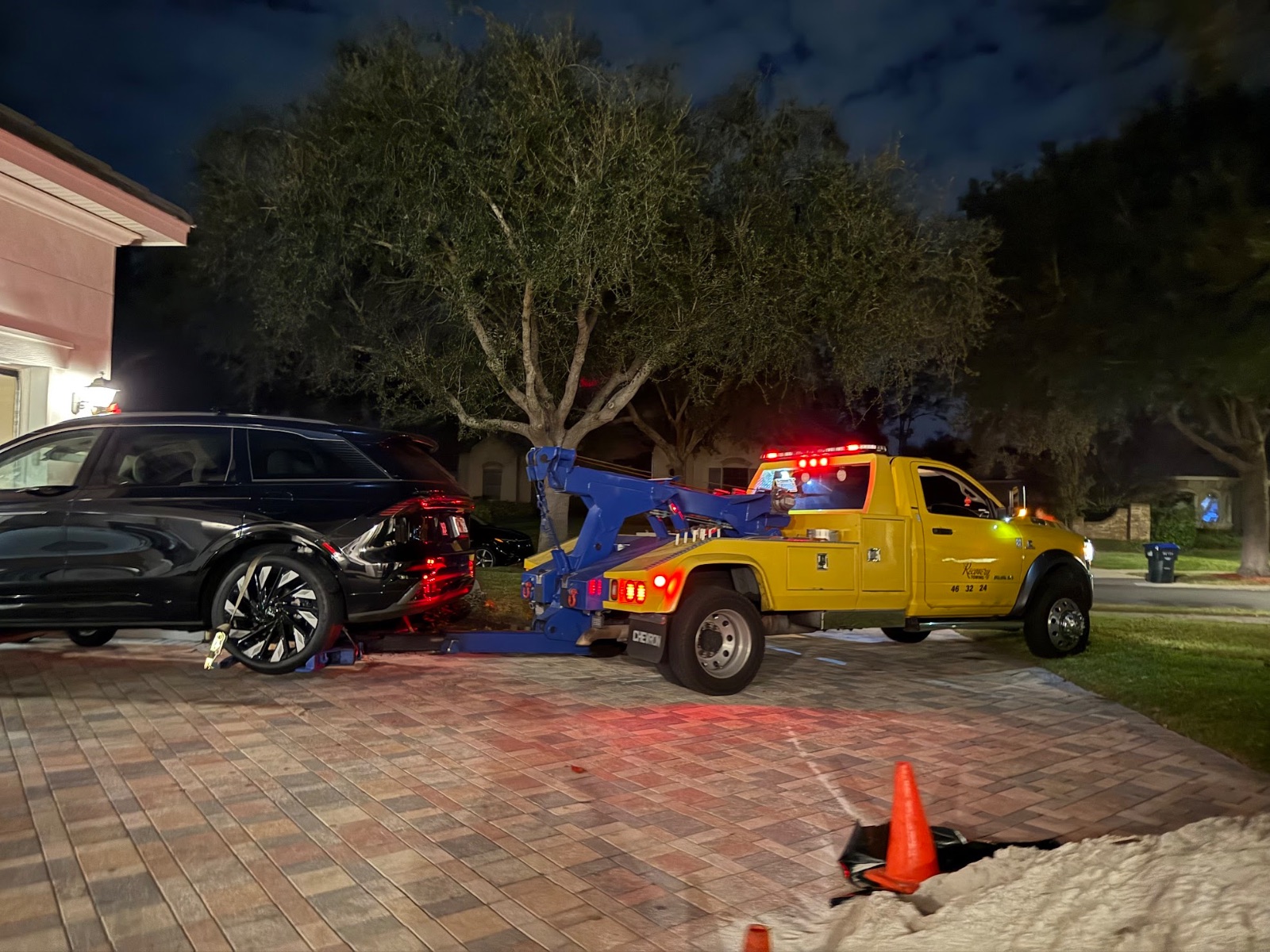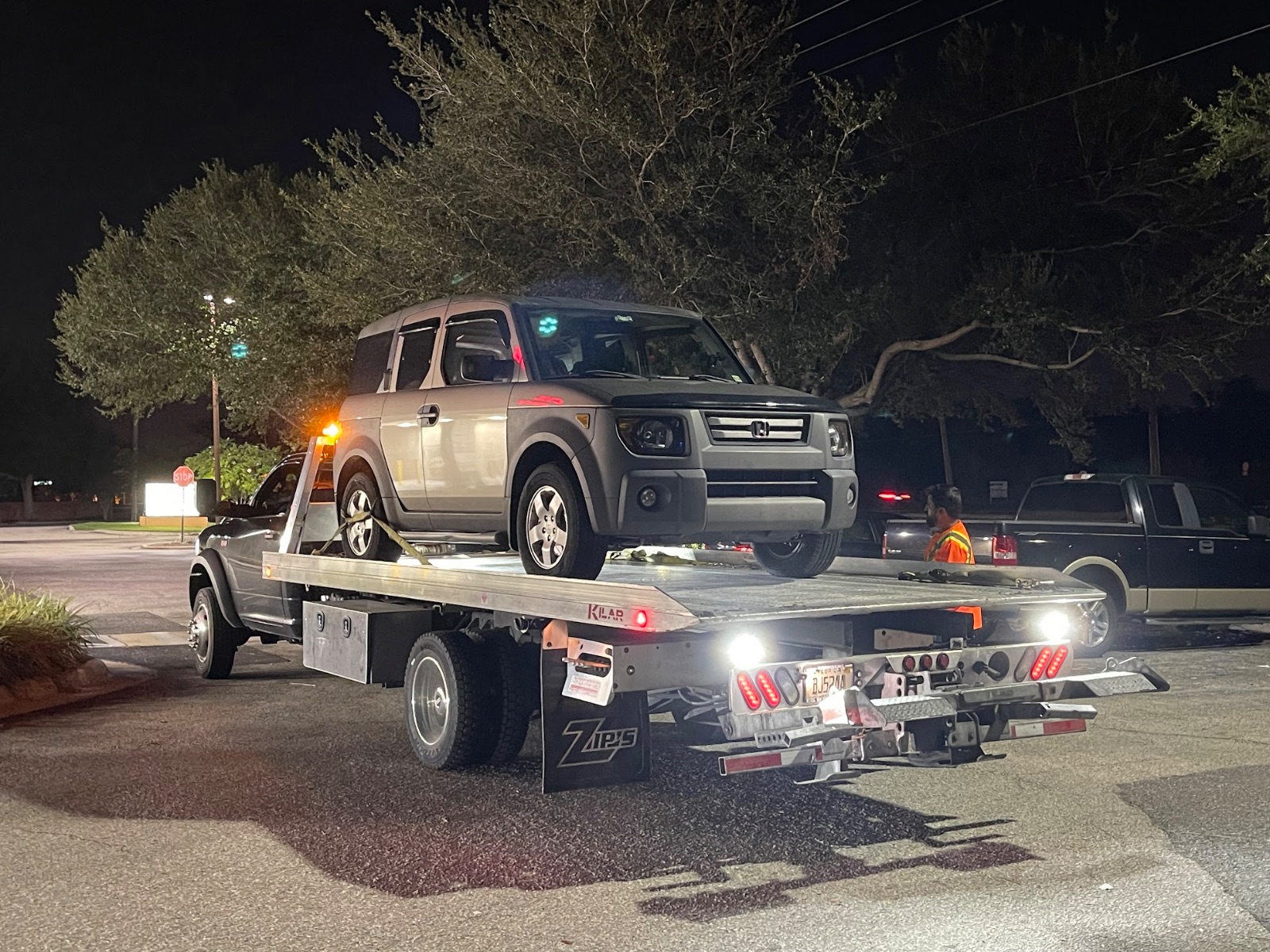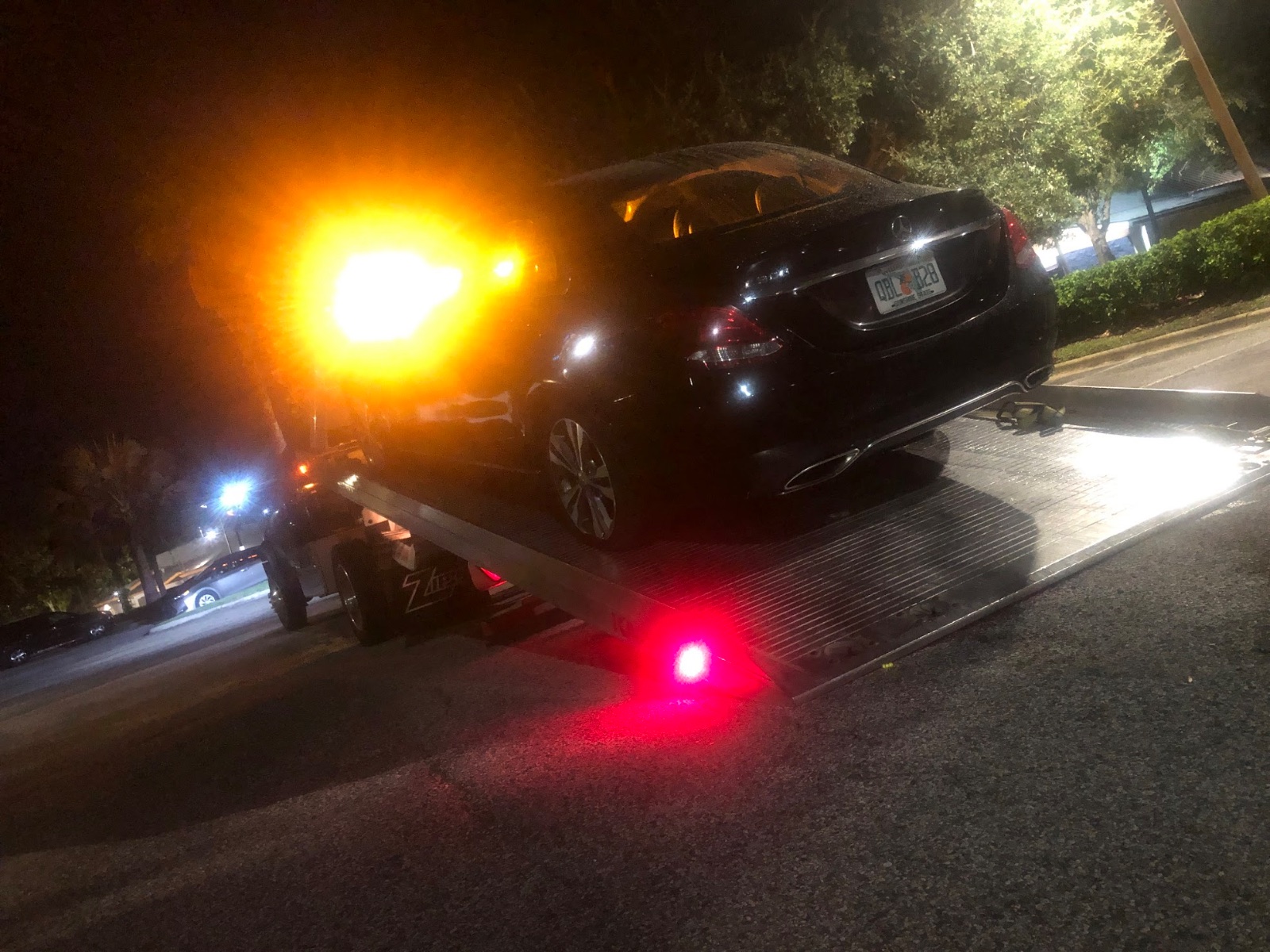
Call around for a tow from Orlando to another city and you’ll hear the same thing over and over: “We don’t go that far.” Long-distance towing is the service most local companies quietly avoid. Here’s how it actually works — and what determines the price.
Why most companies stop at the county line
A long haul ties up a truck and a driver for hours, sometimes a full day. For a company built around quick, high-volume local calls, that’s lost revenue — so they cap their radius and turn the rest away. We took the opposite view. Long-distance hauling is the service that defines how we operate: no arbitrary boundaries, no “sorry, that’s too far.”
What shapes the price
Long-distance towing is usually priced on a few honest variables rather than a flat sticker:
- Distance — the round trip, since the truck has to come back.
- Vehicle type — a standard car loads differently than a low, heavy, or non-rolling vehicle.
- Condition & access — whether it rolls, steers, and can be reached easily affects loading time.
- Timing — a scheduled relocation is simpler to plan than a middle-of-the-night emergency.
We’d rather talk it through and give you a real number than hide behind a vague online estimate. Tell us the pickup, the destination, and the vehicle, and we’ll walk you through it.
A local crew doing your long haul is often a real alternative to a national auto-transport broker — you deal with one accountable team, start to finish, instead of a dispatcher who hands your car to a stranger.
When long-distance towing makes sense
Relocating for work and want your car to arrive when you do. Bought a vehicle a few hours away. Broke down on a road trip and need it brought home rather than dropped at the nearest unfamiliar shop. In every one of those cases, a long-distance tow with a crew that answers the phone beats scrambling for an out-of-town stranger.